Legislative Update
03.06.2026
As the legislative session continues, much of the work happening at the Capitol is focused on ensuring Minnesota’s government programs are operating effectively and responsibly. This week, a significant portion of my work centered on healthcare policy and oversight of the state’s Medical Assistance program.
Minnesota’s healthcare system supports thousands of patients and families across our state, but it also represents one of the largest areas of state spending. Ensuring these programs are administered responsibly while protecting access to care is essential for both the patients who rely on them and the taxpayers who fund them.
Several issues came before the legislature this week that highlight the importance of oversight, transparency, and responsible program management.
Work in the House Health Committee
Minnesota’s healthcare system was already facing substantial financial challenges before recent federal policy changes. Without steps to mitigate potential funding reductions, the financial impact on our healthcare programs could be significant and far-reaching.
This week I presented two bills in the House Health Finance and Policy Committee focused on ensuring Minnesota’s Medical Assistance program remains compliant with federal law while also strengthening oversight of the program.
Medical Assistance is jointly funded by the state and federal government, so Minnesota must periodically update state law to remain aligned with federal requirements and protect the federal funding that supports care for thousands of Minnesotans.
Some of the updates included in these bills are also aimed at improving program oversight and accountability. For example, the legislation increases the frequency of eligibility reviews for certain enrollees, requires regular cross-checks with federal death records to ensure benefits are not paid to individuals who are deceased, and improves information sharing between health plans and the Department of Human Services to keep enrollment records accurate.
Aligning Minnesota Law with Federal Medicaid Requirements
The first bill I presented, HF 3439, updates Minnesota statutes to align with recent federal changes to Medicaid law.
The bill includes several administrative updates designed to improve how the program is managed. These changes increase the frequency of eligibility redeterminations for certain enrollees, reduce retroactive coverage timelines, and strengthen verification procedures that help ensure the program is operating accurately and responsibly.
These updates are intended to improve oversight while also helping Minnesota remain compliant with federal program requirements.
Community Engagement Requirements
I also presented HF 3763, which establishes community engagement requirements for certain able-bodied adults enrolled in Medical Assistance.
These provisions align Minnesota law with federal requirements encouraging participation in work, job training, education, or volunteer service for individuals who are able to participate. The bill focuses primarily on adults without dependent children and includes exemptions for individuals facing legitimate barriers such as disability, caregiving responsibilities, medical conditions, or participation in treatment programs.
The legislation also allows limited data sharing between state agencies so employment and wage information can be used to verify participation requirements and ensure the program is administered effectively.
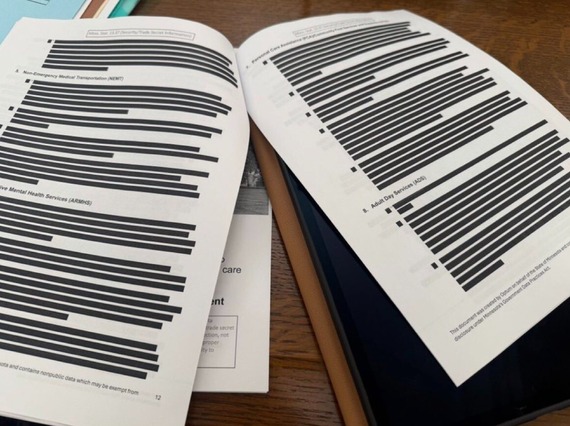
The Redacted Optum Report
Another issue receiving attention this session is the Optum review of Minnesota’s Medical Assistance program.
The Department of Human Services contracted with Optum to review several Medicaid-funded services that have been identified as higher risk for improper payments. The goal of the review was to identify weaknesses in program design, oversight, and billing practices so the state can strengthen safeguards and better protect taxpayer dollars.
While the review identified concerning vulnerabilities within the system, the version of the report released publicly was heavily redacted, with significant portions removed before it was shared with legislators and the public.
When we are dealing with billions of dollars in public healthcare spending, transparency is essential. Legislators need access to complete information so we can fully understand where problems exist and determine how to address them moving forward.
Staying Connected
Hearing directly from constituents is an important part of my work at the Capitol. If you have questions, concerns, or ideas you would like to share, please don’t hesitate to reach out to my office.
It is an honor to serve the people of our district, and I remain committed to working toward responsible solutions that strengthen Minnesota’s healthcare system while protecting taxpayers and the patients who depend on these programs.
Sincerely,
Rep. Danny Nadeau